

 русский
 Français
 Español
 Deutsch
 عربى
عربى


What Factors Determine the Shaving Performance of an Electric Shaver?
Shaving performance is one of the most important considerations for distributors, retailers, importers, and OEM buyers when evaluating products from an electric shaver manufacturer. Whether sourcing a portable electric shaver, a cordless shaver for face, or a portable men's shaver for different markets, buyers expect products that deliver efficient hair removal while maintaining user comfort. Achieving this balance depends on multiple engineering and manufacturing factors rather than a single component. From blade geometry and motor output to battery stability and assembly precision, every detail contributes to the overall shaving experience. Understanding these factors helps buyers compare products more effectively and select solutions offered by a reliable electric shaver factory.
Blade Design Plays a Central Role in Cutting Efficiency
The cutting system is the foundation of every electric shaver. Blade shape, edge angle, and manufacturing accuracy all influence how effectively facial hair is captured and cut. Whether developing a cordless beard shaver for daily grooming or a beard electric trimmer designed for precision styling, the blade system plays a direct role in shaving quality. A well-designed cutting structure reduces repeated passes across the same area, allowing users to complete shaving more comfortably.
Blade materials also contribute to durability. Stainless steel remains one of the most common choices because it offers corrosion resistance and maintains cutting performance during regular use. Some manufacturers further improve wear resistance through surface treatments or coating technologies, helping the blade maintain stable operation throughout its service life while supporting long-term OEM production.
The Relationship Between Cutter Head Structure and Facial Contours
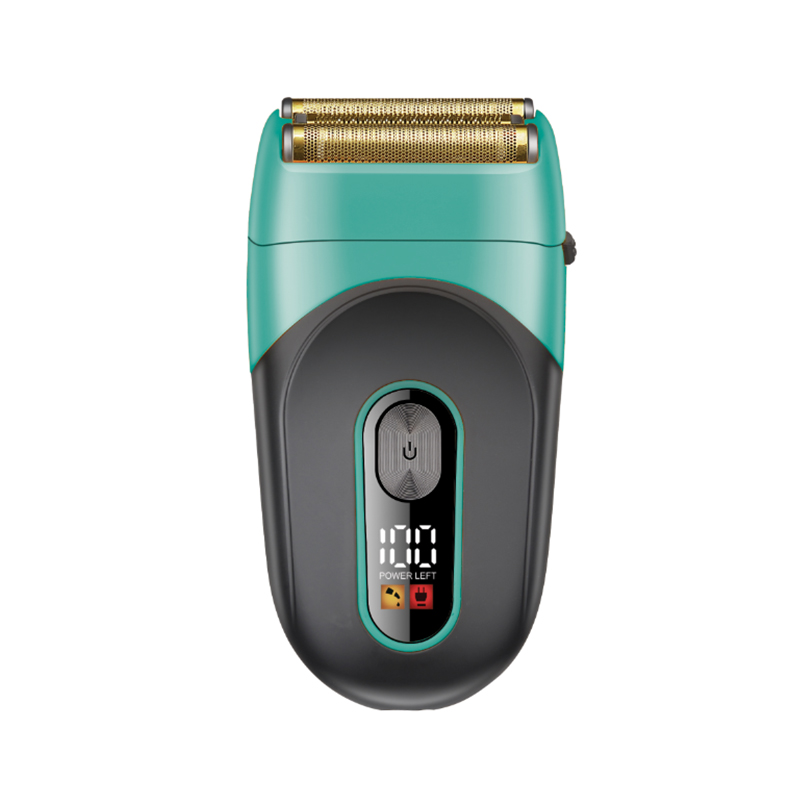
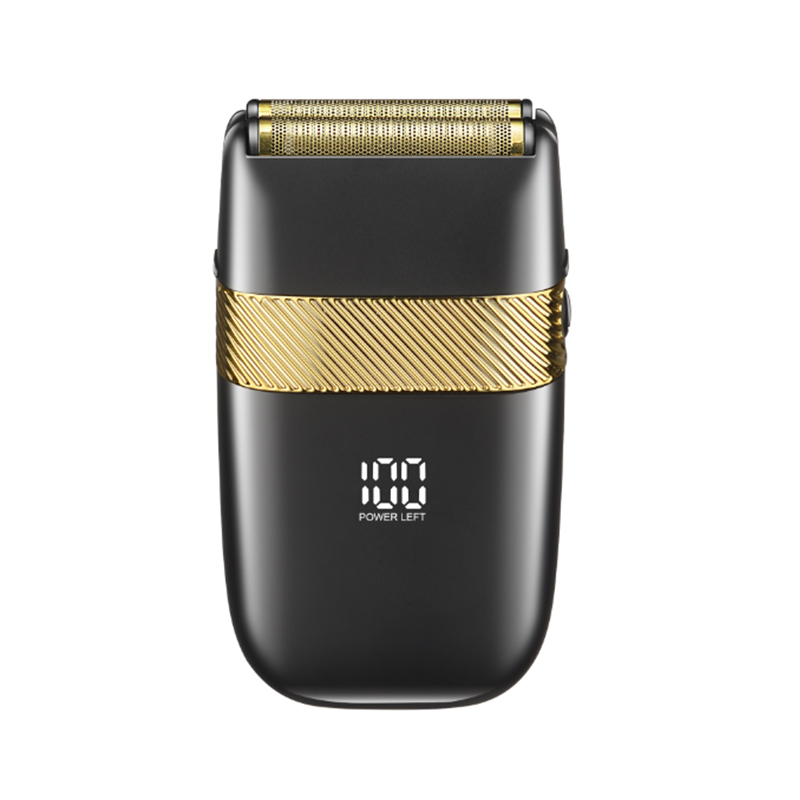
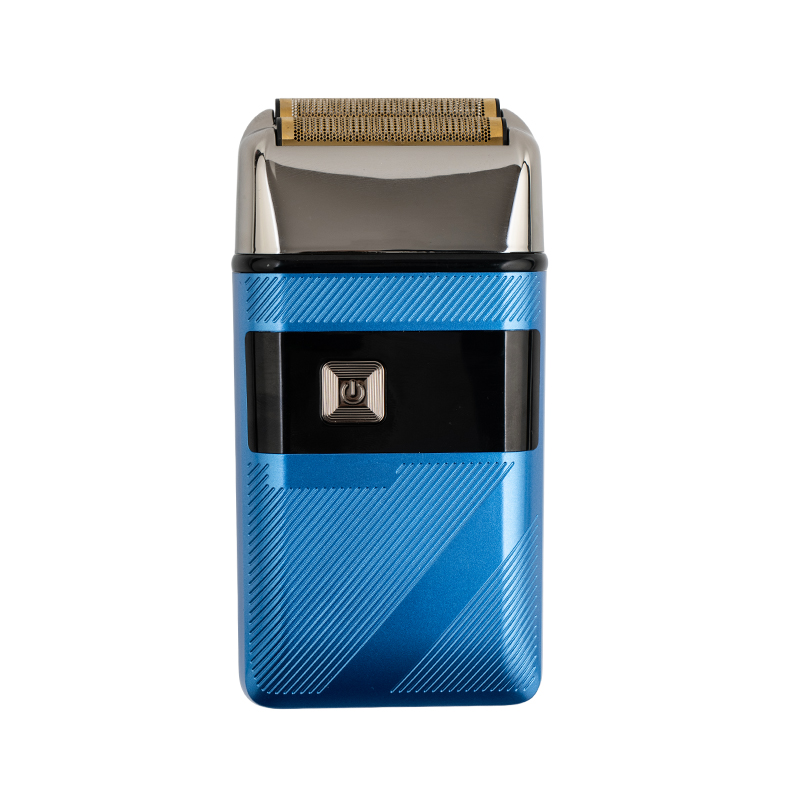
An electric shaver performs more effectively when the cutter head adapts to different facial shapes. Since the chin, jawline, neck, and cheeks all have different contours, a fixed shaving head may struggle to maintain consistent contact with the skin. Floating cutter heads are designed to move independently, allowing the shaving surface to follow facial curves with less pressure from the user. This design is commonly adopted in modern cordless shaver for face products intended for everyday use.
Flexible movement also helps distribute contact more evenly across the shaving area. This allows more hairs to enter the cutting system naturally while reducing unnecessary friction between the shaver and the skin. For portable travel razor products, maintaining efficient contact while keeping a compact structure is particularly important.
| Design Feature | Influence on Shaving Performance |
| Floating cutter head | Maintains better contact with facial contours |
| Precision blade alignment | Improves cutting consistency |
| Multiple cutting elements | Captures more hair during each pass |
| Smooth protective foil or guard | Helps reduce direct skin friction |
Motor Performance Directly Influences Cutting Stability
The motor supplies the driving force behind the cutting system. Stable rotational speed enables blades to maintain consistent cutting action even when encountering dense or uneven facial hair. This is especially important for cordless beard shaver models that rely entirely on battery power. If motor output fluctuates significantly, users may experience pulling, incomplete cutting, or the need for additional shaving passes.
Besides rotational speed, torque also affects shaving performance. Adequate torque helps the blade continue operating smoothly under varying loads without excessive speed reduction. A balanced motor design supports consistent performance while also contributing to lower vibration and reduced operating noise, making it suitable for both household and portable men's shaver applications.
Battery Performance Supports Consistent Operation
Rechargeable electric shavers rely on battery systems to deliver stable power throughout the shaving process. Battery capacity determines runtime, while discharge stability influences motor consistency. As battery voltage decreases, an unstable power supply may affect blade movement and cutting efficiency. These factors are particularly important when designing portable electric shaver products intended for travel and business use.
Modern battery management systems help regulate charging and discharging conditions, protecting battery health during repeated charging cycles. This contributes to more stable daily operation and supports the long-term reliability expected by buyers sourcing from an experienced OEM electric shaver manufacturer.
| Battery Characteristic | Effect on User Experience |
| Stable voltage output | Maintains consistent motor performance |
| Higher battery capacity | Extends operating time between charges |
| Battery management system | Supports charging safety and battery lifespan |
| Fast charging capability | Improves convenience for daily users |
Skin Comfort Depends on More Than Cutting Speed
Fast cutting alone does not guarantee a comfortable shaving experience. Skin comfort is influenced by the interaction between the blade, protective structure, and overall mechanical movement. Proper spacing between the blade and protective guard helps capture facial hair while limiting unnecessary skin contact. This balance is equally valuable for both beard electric trimmer products and cordless shaver for face models.
Surface smoothness, balanced pressure distribution, and controlled vibration all contribute to a more comfortable shave. These engineering details become increasingly important for users with sensitive skin or those who shave frequently.
Manufacturing Precision Affects Product Consistency
Even a carefully designed electric shaver depends on manufacturing accuracy to achieve consistent performance. Precision molding, component machining, and assembly tolerance all influence the final product. Small deviations in blade positioning, motor installation, or cutter head alignment may affect cutting quality during everyday use. For an electric shaver factory serving OEM and private label customers, maintaining consistent manufacturing standards is essential for large-volume production.
Manufacturers often implement dimensional inspections, functional testing, and automated assembly processes to reduce production variation. Consistent manufacturing standards help ensure that products from different production batches deliver similar shaving performance.
Noise and Vibration Influence User Satisfaction
Mechanical balance has a direct impact on operating comfort. Excessive vibration may reduce handling stability, while higher noise levels can negatively influence the overall user experience. Engineers usually optimize rotating components, motor balance, and internal transmission structures to reduce unnecessary vibration during operation.
Lower vibration not only improves comfort but also helps maintain smoother blade movement, allowing the cutting system to operate more consistently under different shaving conditions, including compact portable travel razor designs.
Water Resistance Supports Daily Maintenance
Many users prefer electric shavers that can be cleaned under running water. Waterproof construction simplifies routine maintenance by allowing hair residue and shaving foam to be rinsed away more easily. Cleaner cutting components generally maintain better operating conditions over time, making this feature attractive for premium portable men's shaver products.
Achieving reliable water resistance requires careful sealing around charging ports, switches, housing joints, and internal electronic components. During product development, manufacturers typically conduct water resistance testing to verify sealing effectiveness under defined testing conditions.
Quality Inspection Throughout Production Helps Maintain Performance
Shaving performance depends not only on product design but also on production quality management. Incoming material inspection verifies that blades, motors, batteries, and electronic components meet technical specifications before entering assembly. During production, manufacturers may perform functional testing, cutter alignment inspection, electrical safety verification, and operational checks to monitor product consistency.
Finished products often undergo additional testing before shipment, including motor operation, charging performance, blade movement, noise measurement, and appearance inspection. These procedures help custom electric shaver manufacturers deliver consistent products for global distributors, wholesalers, and brand owners.
| Production Stage | Main Inspection Focus |
| Incoming materials | Blade quality, motor specifications, battery verification |
| Assembly process | Component alignment and functional operation |
| Performance testing | Motor speed, vibration, cutting function, charging performance |
| Final inspection | Appearance, electrical safety, operational consistency |
Product Positioning Should Match Market Requirements
Different markets often prioritize different product characteristics. Some buyers focus on compact portable electric shaver models for travel retail, while others require cordless beard shaver products designed for daily grooming. Battery capacity, motor output, cutter head structure, waterproof capability, and accessory configuration can all be adjusted according to customer requirements.
For OEM and ODM projects, manufacturers often work closely with customers to balance product features, production cost, target pricing, and market positioning. Careful product planning enables an experienced electric shaver manufacturer to support wholesalers, importers, retailers, and private label brands with customized product solutions for different international markets.
How Can Manufacturers Balance Product Cost and Performance in Electric Shavers?
Balancing product cost and performance is one of the most important challenges in electric shaver manufacturing. Buyers expect products that deliver reliable shaving performance while remaining competitive in different market segments. For manufacturers, achieving this balance requires careful planning throughout product development, component selection, manufacturing, and quality management. Instead of relying on a single premium component, a well-designed electric shaver is usually the result of coordinated engineering decisions that optimize the relationship between functionality, production efficiency, and overall manufacturing cost.
Product Positioning Should Guide Engineering Decisions
Before selecting components or designing the internal structure, manufacturers need to define the intended market position of the product. Entry-level models, mid-range products, and higher-value models often have different customer expectations regarding runtime, waterproof capability, motor performance, and additional functions. A clearly defined product strategy helps engineering teams allocate resources to the features that customers value most rather than increasing costs through unnecessary specifications.
For manufacturers serving OEM and ODM customers, flexible product planning also allows different configurations to be developed from a common platform. This approach reduces development costs while providing customers with multiple product options suitable for different sales channels.
Component Selection Requires Practical Evaluation
The selection of blades, motors, batteries, electronic controls, and housing materials directly affects both manufacturing cost and shaving performance. Choosing higher-cost components does not always produce better value if they exceed the requirements of the target market. Instead, manufacturers evaluate durability, compatibility, production stability, and supply consistency before finalizing component specifications.
For example, stainless steel blades with stable machining accuracy can provide reliable cutting performance while maintaining reasonable production costs. Likewise, selecting motors with balanced speed and torque helps achieve smooth operation without unnecessarily increasing power consumption or manufacturing expense.
| Manufacturing Element | Cost Consideration | Performance Consideration |
| Blade material | Material processing cost | Cutting efficiency and service life |
| Motor selection | Production and sourcing cost | Stable speed and shaving consistency |
| Battery system | Capacity and charging components | Runtime and power stability |
| Electronic control | Circuit complexity | Power regulation and operational stability |
Manufacturing Efficiency Reduces Overall Production Costs
Production efficiency has a direct influence on product cost. Automated assembly equipment, standardized production procedures, and well-organized manufacturing processes help reduce manual operations while improving consistency between production batches. As production volume increases, efficient manufacturing methods help distribute fixed costs more effectively across each finished product.
Yuyao Laituo Electrical Appliance Co., Ltd. combines automated production lines with complete manufacturing capabilities covering product development, component assembly, and finished product production. This integrated manufacturing approach supports stable production while helping improve production efficiency throughout the manufacturing process.
Structural Design Can Simplify Production
Good structural design is not only related to product appearance but also influences assembly time and manufacturing complexity. Engineers often simplify internal structures by reducing unnecessary parts, improving component compatibility, and optimizing installation procedures. These improvements can shorten assembly time while reducing the possibility of installation errors.
A simplified product structure also benefits long-term maintenance, component replacement, and production management, allowing manufacturers to improve efficiency without sacrificing the functional performance expected by customers.
Intelligent Functions Should Match Practical Market Demand
Modern electric shavers often include functions such as intelligent power regulation, battery indicators, travel locks, and charging reminders. While these features may improve the user experience, manufacturers must evaluate whether they match the purchasing priorities of different customer groups. Adding functions that provide limited practical value may increase production costs without improving market competitiveness.
For many personal grooming products, intelligent power regulation provides a practical balance by helping maintain stable motor output under different shaving conditions while supporting efficient battery usage. Selecting functional features based on actual market demand allows manufacturers to better control development costs.
| Design Decision | Potential Cost Impact | User Benefit |
| Floating cutter head | Moderate | Improved adaptation to facial contours |
| Intelligent power regulation | Moderate | More consistent motor operation |
| Water-resistant housing | Additional sealing process | Easier cleaning and maintenance |
| Battery indicator | Limited increase | Convenient power monitoring |
Quality Control Helps Avoid Long-Term Costs
Reducing production cost should never rely on lowering quality standards. Products with unstable quality may generate additional expenses through returns, warranty claims, customer complaints, and supply chain disruptions. A comprehensive quality management system helps manufacturers identify production issues before products leave the factory.
Inspection procedures commonly include incoming material verification, dimensional inspection, motor testing, battery performance evaluation, functional testing, electrical safety inspection, and final product examination. These processes support consistent product quality while reducing unnecessary after-sales costs.
Stable Supply Chains Support Competitive Manufacturing
Reliable suppliers contribute to both manufacturing stability and cost management. Long-term cooperation with qualified component suppliers allows manufacturers to maintain consistent material quality while reducing procurement uncertainty. Stable supply relationships also help improve production scheduling and inventory management, especially when serving international customers with large-volume orders.
Manufacturers located within mature industrial clusters often benefit from convenient access to supporting suppliers, reducing transportation time and improving production coordination. This manufacturing environment enables faster communication between suppliers and production teams while supporting efficient resource allocation.
Certification and Compliance Should Be Considered During Product Development
Designing products according to international regulatory requirements from the beginning helps reduce modification costs during later production stages. Electrical safety, material compliance, and product testing should be integrated into product development rather than treated as separate activities after production has started.
For companies serving overseas markets, products that comply with CE and RoHS requirements can better meet the expectations of importers and distributors. Incorporating compliance planning into product development helps manufacturers manage certification processes more efficiently while supporting international market access.
Continuous Product Improvement Supports Long-Term Value
Balancing cost and performance is an ongoing process rather than a one-time engineering task. Manufacturers regularly collect market feedback, evaluate production data, and analyze product performance to identify opportunities for improvement. Small adjustments to blade structure, motor calibration, assembly methods, or electronic control systems can gradually enhance product competitiveness without introducing major increases in manufacturing costs.
By combining research and development with precision testing equipment and full-process manufacturing capabilities, Yuyao Laituo Electrical Appliance Co., Ltd. continues to refine electric shaver solutions that address practical personal grooming requirements while supporting the diverse sourcing needs of global OEM and ODM customers.
